
Prayer journals
Answered prayers, how to keep a record of what God has done
· 3 min read
How to keep a record of answered prayers, what to write when God answers, how to handle prayers that stay open, and why looking back strengthens faith.
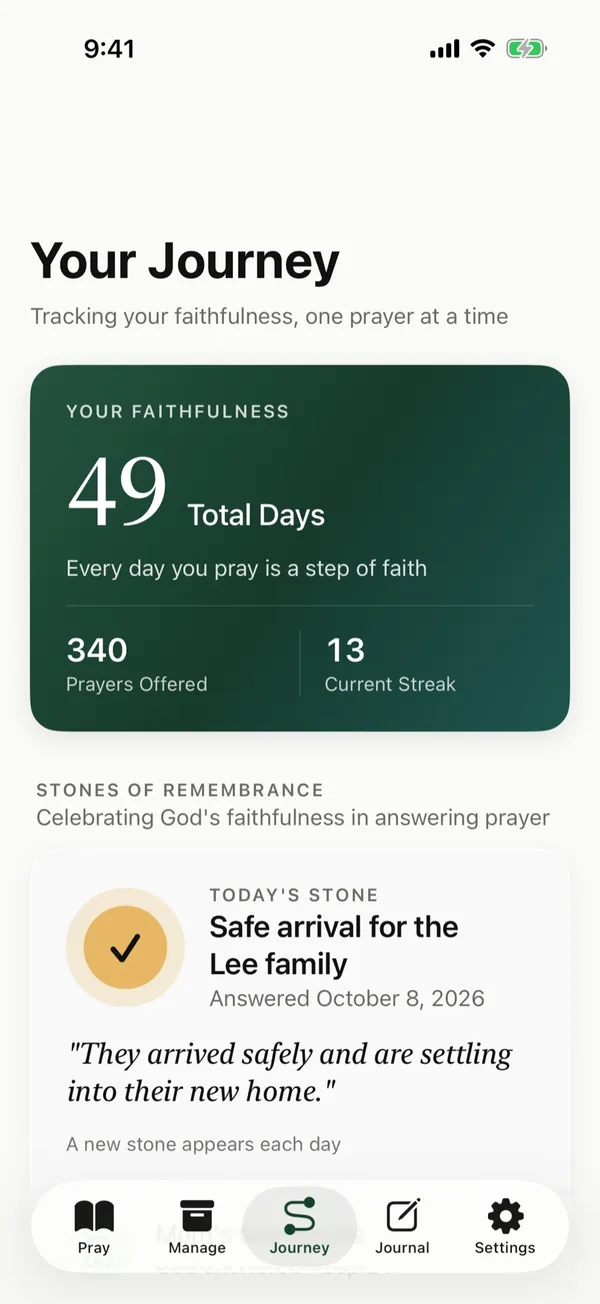
Keeping a record of answered prayers helps you remember what God has done. Write down what you asked, when and how He answered, and how He met you along the way. “I will remember the deeds of the Lord; yes, I will remember your wonders of old” (Psalm 77:11, ESV).
How do you keep a record of answered prayers?
A record of answered prayers is a list of what you asked God for and how He answered. When a prayer is answered, write the date, the request, and a sentence or two about what happened. Keep the record in one place, a journal or an app, and read it back once a month, so you remember God’s faithfulness while you keep praying for what’s still open.
Why remember answered prayers
Remembering answered prayers matters because we forget quickly. A prayer God answered in March can be forgotten by June. The Bible often tells God’s people to remember. After crossing the Jordan, Israel set up twelve stones so their children would ask what they meant (Joshua 4:1-7). Samuel set up a stone and named it Ebenezer, saying, “Till now the Lord has helped us” (1 Samuel 7:12, ESV).
What to write when God answers
A note about an answered prayer can be short. Include:
- The date
- What you asked for
- How God answered, in a sentence or two
- Anything you want to remember about how you felt or what you learned
What counts as an answered prayer?
An answered prayer is one where you can see how God responded to what you asked. Sometimes He gives exactly what you prayed for, like a good report after surgery. Sometimes the answer looks different from the request, like peace in a hard season instead of the change you wanted. Write down both, in your own words, as honestly as you can.
Prayers that stay open
Not every prayer is answered quickly, and some answers aren’t what we asked for. Paul pleaded three times for relief, and the Lord said, “My grace is sufficient for you” (2 Corinthians 12:9, ESV). Keep those prayers on your list. Write down how God met you while you waited. Looking back, you’ll often see His care you couldn’t see at the time.
For what the Bible says about waiting, and how long to keep praying, see unanswered prayer.
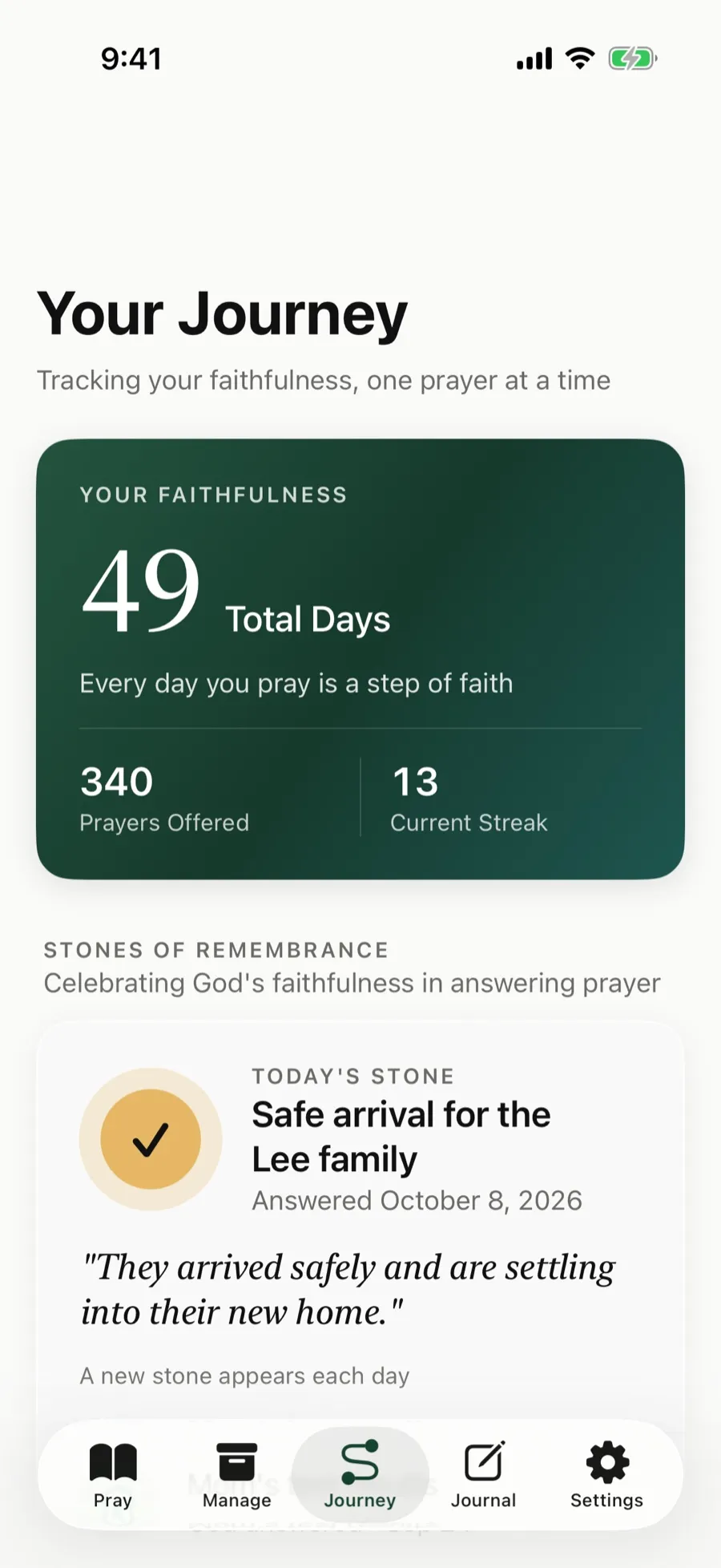 In The Pray App, answered prayers become Stones of Remembrance in Journey.
Look back regularly
Reading your record of answered prayers once a month strengthens faith for the prayers you’re still praying. Thank God for each answer as you read.
To see the days you have prayed and how long you have prayed for each request, see how a prayer tracker app works.
Keep a record of answered prayers in The Pray App
The Pray App keeps answered prayers with the note you wrote and the date. While you pray, tap Answered under the card. Under How did God answer?, write a few words about what happened, then tap Mark as Answered.
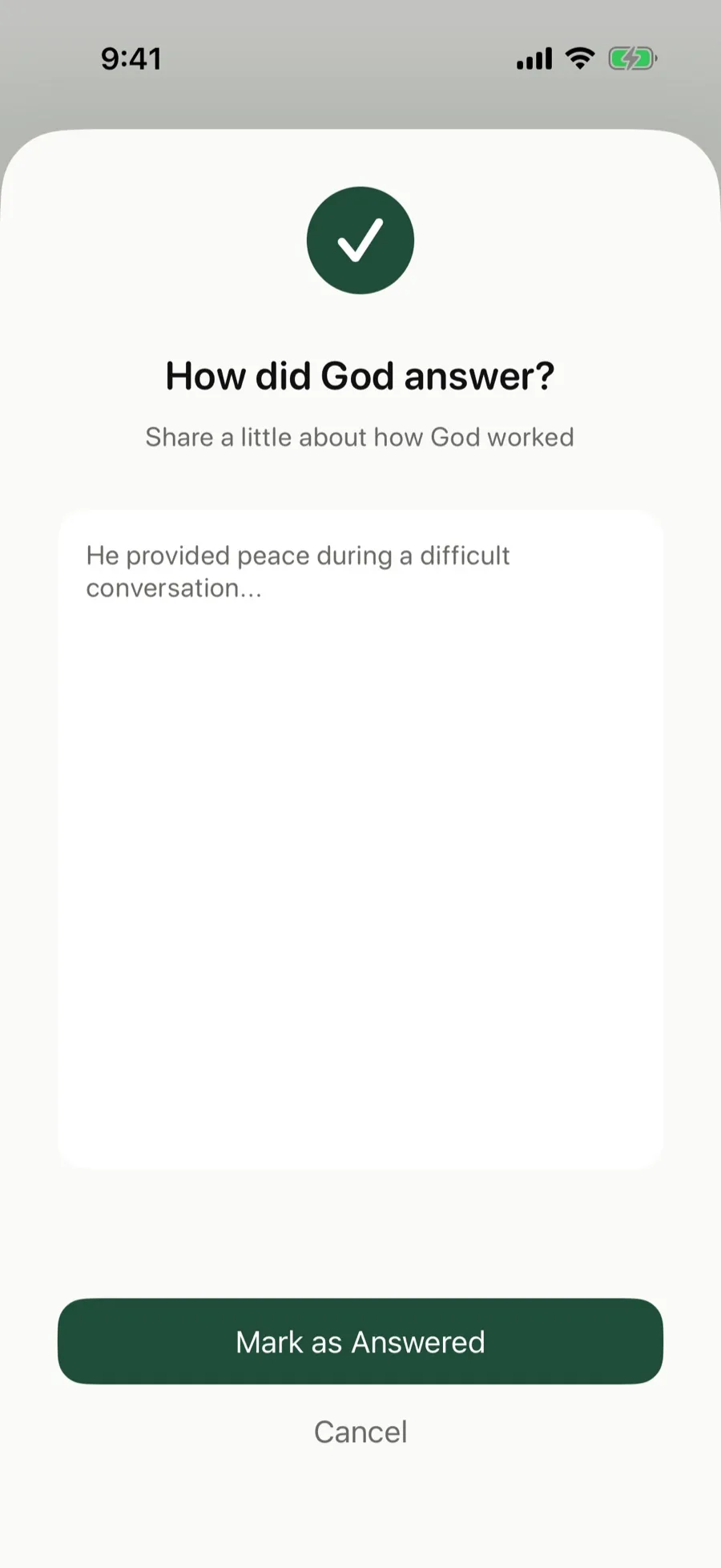 Write a few words about how God answered, then tap Mark as Answered.
The prayer moves to Stones of Remembrance in Journey. Prayers you’re still bringing to God stay under Still Seeking, with how many days you’ve prayed for each.
The Pray App is free on the App Store. See how to mark a prayer answered.
Questions people ask
Why should I keep a record of answered prayers?
Writing down answered prayers helps you remember God's faithfulness. The Bible often calls God's people to remember what He has done (Psalm 77:11, Psalm 103:2).
What should I write when God answers a prayer?
Write the date, what you asked for, how God answered, and how you felt. Even a sentence or two is enough to look back on later.
What about prayers that aren't answered?
Some prayers stay open for years, and some we may not see answered the way we hoped. Keep praying, and keep a record of those too. Looking back often shows how God was at work while you waited.
Related guides
- Prayer journal app, how to keep a prayer journal on iPhoneWhat to look for in a prayer journal app, how journaling on your iPhone compares to paper, and how The Pray App ties your journal to the people you pray for.
- Prayer journal ideas for beginnersPrayer journal ideas for beginners, from simple layouts to praying Scripture, keeping a gratitude list, and tracking answered prayers over time.
- Prayer journal prompts for every day of the weekPrayer journal prompts for when you don't know what to write, for thanks, confession, requests, Scripture, and looking back on how God has answered.
- How to start a prayer journal, a simple guide for beginnersHow to start a prayer journal, what to write, prompts for when you're stuck, and how to record God's answers so you can look back on them later.